CALL US! 415-851-9190
LetsGo@Lucky-Tuk-Tuk.com

Originally used in tropical, often developing countries, the tuk tuk is a convenient and fun way to navigate urban areas. Known by many names—rickshaw being the most famous—these motorized vehicles earned their nickname from the distinctive sound they make while running. Once limited to bustling streets in Asia, they are now becoming a global tourism trend.
What makes a tuk tuk tour so good (and why travelers love them):
For an unforgettable San Francisco tour, hop aboard a private tour with Lucky Tuk Tuk and experience the city’s top landmarks in a thrilling and unique way.
United States |
Spain |
Portugal |
France |
Thailand |
Sri Lanka |
Hungary |
United Kingdom |
Italy |
Croatia |
Other Destinations |
Regional Variations

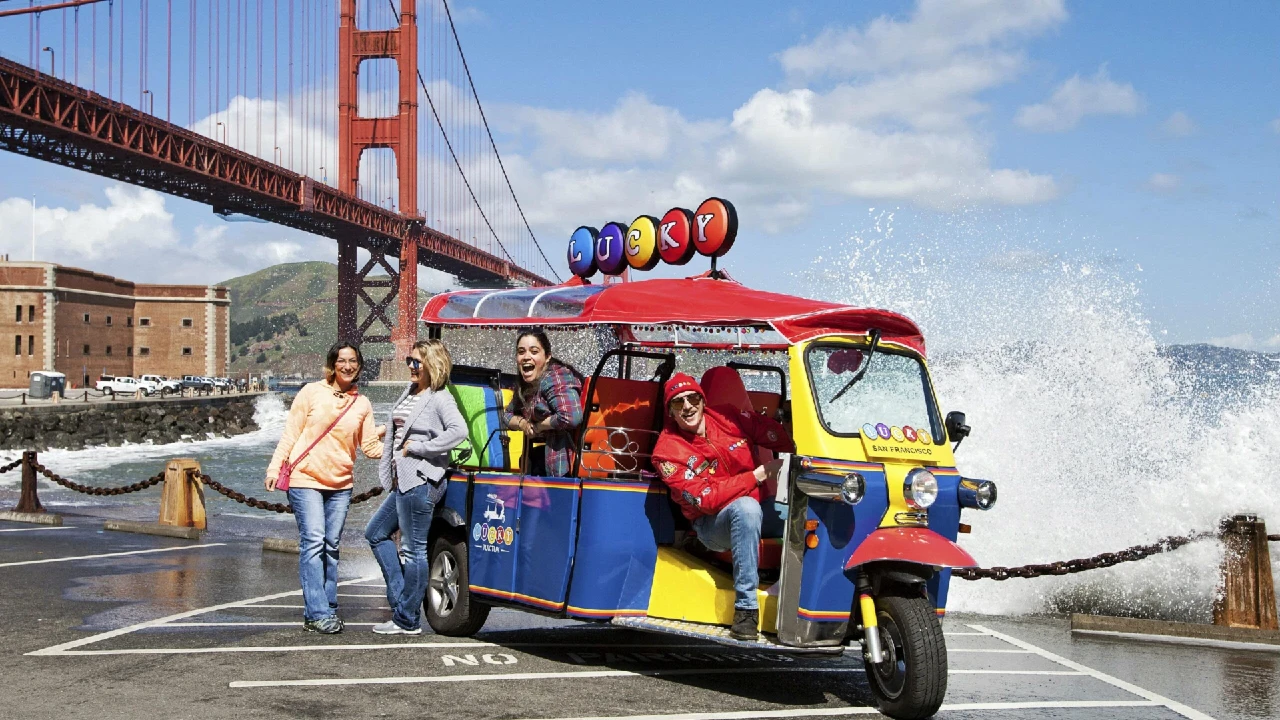
Lucky Tuk Tuk is a sustainable, vibrant, unforgettable touring experience based in San Francisco, California. The brightly painted eco-friendly electric vehicles can accommodate up to six passengers plus a driver.
Why it’s a great pick: private group touring means your experience is flexible, comfortable, and built around photo moments, scenic routes, and the best city flow on the day you ride.
Tuk tuks can usually be found parked on centrally located streets and squares in Lisbon. Most companies have online reservations. There is a large selection of tuk-tuk tour companies in Lisbon and most operate with electric-powered Tuk Tuks.
Bangkok and the county of Thailand are perhaps the most well-known location of the iconic Tuk Tuk. When traveling by Tuk Tuk with their small footprint you can visit attractions in Bangkok that most visitors miss. Traveling on board these 3-wheeled motorbikes allows visitors to breeze through traffic and access narrow streets with ease.
SRI LANKA
SUDAN: Rickshaws, known as “Raksha” in Sudan most common means of transportation followed by the bus in the capital Khartoum.
TANZANIA: Locally known as “bajaji“
EGYPT: Locally named the “toktok,” the rickshaw is found in some parts of Egypt.
NIGERIA: In Lagos Tuk Tuks are known as “keke“
INDIA: Two types of auto-rickshaws in India. In older versions, the engines were below the driver’s seat, while in newer versions engines are in the rear. in Delhi there also used to be a variant (now outlawed) powered by a Harley-Davidson engine called the phat-phati. As of 2018 India has about 1.5 million battery-powered, three-wheeled rickshaws on its roads. Some 11,000 new ones hit the streets each month.
MADAGASCAR: Known as “bajaji” in the north and “tuk-tuk” or “tik-tik” in the east
BANGLADESH: Auto rickshaws are locally called “baby taxis” and more recently “CNGs” due to their fuel source, compressed natural gas.
CAMBODIA: Different from tuk-tuks in most of the world each has four wheels and is a motorcycle (which leans) and trailer (which does not).
GUATEMALA: Vehicles are referred to as tuk-tuks in Guatemala.
CUBA: “Cocotaxi” is an auto rickshaw-type taxi vehicle in Cuba. The name comes from the word coco, which means coconut. The shell of the body is yellow and is typically round, giving it the appearance of a half-coconut.
PAKISTAN: In addition to auto-rickshaws in many cities in Pakistan, there are motorcycle rickshaws, called “chand gari” (moon car) or “chingchi” (after the Chinese company that 1st brought them to the market)
THAILAND: The “Tuk Tuk” name is onomatopoeic, mimicking the sound of a small (often two-cycle) engine. An equivalent English term would be “putt-putt”
ITALY: Commonly used in Italy since the late 1940s, The Piaggio Ape “Tukxi” designed by the Vespa creator is the most popular model.
UNITED KINGDOM: Tuk Tuks & Auto Rickshaws were first introduced into the UK by Tukshop in 2004.
EL SALVADOR: “mototaxi’ or “moto” is the El Salvadoran version of the auto-rickshaw.
CHINA: Called sān lún chē and sometimes sān bèng zǐ – meaning three-wheeler or tricycle. The word tuk tuk is transliterated as dū dū chē – beep beep car.
INDONESIA: Auto rickshaws are called “Bajay’ or “Bajaj” Outside of Jakarta, the bentor-style auto rickshaw is ubiquitous, with the passenger cabin mounted as a sidecar.
PHILIPPINES: Referred to as “tricycles” – in Filipino traysikel and Cebuano traysikol. Usual design is a passenger or cargo sidecar fitted to a motorbike.
SRI LANKA: Auto rickshaws are known as “three-wheelers” tuk-tuks or “trishaws“
If you’re here for the quirky ride vibes (same), here’s a little extra context to make tuk tuks even more fun to talk about, spot in the wild, and ride. They’re simple, clever, and wildly different from place to place—kind of like San Francisco neighborhoods, honestly.
Want to go deeper? These three pages connect together nicely—one is pure fun facts, one is the global “names & styles” rabbit hole, and one highlights the people-story side of Lucky Tuk Tuk.
In San Francisco, tuk tuks aren’t just a ride—they’re part of the experience. Between dramatic hills, neighborhood-to-neighborhood variety, and iconic photo stops, a tuk tuk style tour fits the city perfectly. And Lucky Tuk Tuk adds a local storytelling layer by naming vehicles in honor of significant women in San Francisco’s history (it’s a fun detail that makes the fleet feel like it has personality).