CALL US! 415-851-9190
LetsGo@Lucky-Tuk-Tuk.com

Skyline views, mansion spotting, and a lot less hill climbing. Pacific Heights is where San Francisco goes full “wow”: spectacular Victorian and Edwardian homes, leafy blocks, famous movie locations, and some of the most dramatic residential streets in the city.
Explore Private Lucky Tuk Tuk City ToursSee the Neighborhood Highlights
Billionaires’ Row
Broadway between Lyon and Divisadero
Lyon Street Steps
Gardens, stairs and beautiful Bay views
Historic mansions
Victorian, Edwardian and grand revival architecture
Come for the architecture; stay for the stories. Pacific Heights has been associated with San Francisco’s wealthiest residents for generations, but its appeal is much bigger than famous names. The neighborhood blends elaborate old houses, distinctive modern homes, elegant public parks, movie history and views that stop you in your tracks. It’s a wonderful place to experience San Francisco’s architectural personality up close.
Pacific Heights is often called one of San Francisco’s most prestigious neighborhoods, known for its lavishly restored homes and combination of old-money history and modern technology fortunes. You don’t need to follow real-estate news to enjoy it: simply looking down a picturesque block can be a memorable part of a San Francisco visit.
Pacific Heights developed into a coveted residential district during the late 19th and early 20th centuries, as successful San Franciscans sought larger homes, commanding views and distance from the crowded commercial center. Merchants, financiers and families tied to shipping, mining, timber, sugar and other industries helped establish its reputation for elaborate architecture and social prestige.
The phrase “Gold Coast” was associated with this affluent part of the city long before the modern nickname “Billionaires’ Row.” Over time, prosperous business families were joined by prominent public figures, philanthropists, designers and technology entrepreneurs. That’s why the area feels like several eras of San Francisco wealth and architecture sharing the same hillside.
Pacific Heights is frequently described as having escaped the worst of San Francisco’s 1906 earthquake and fire. That’s broadly true for many blocks, but the familiar explanation that “bedrock saved the neighborhood” is incomplete. Geological conditions mattered, yet the path of the fires, the neighborhood’s location outside many burned districts, and fire-fighting efforts also shaped which buildings survived. Some structures were damaged, and later construction brought new architectural styles to the area.
According to San Francisco Planning’s historic-resource documentation, the neighborhood largely escaped the 1906 fire, and post-disaster building created another wave of architect-designed residences. The result is part of what makes Pacific Heights so appealing today: elaborate Victorian survivors alongside early-20th-century revival architecture and newer designs.
These are the little details that turn a beautiful drive or walk into a genuinely interesting San Francisco story.
Pacific Heights retained many important residences through the 1906 earthquake and fire, helping preserve a fascinating cross-section of the city’s pre-disaster architecture. Its survival reflects the path of the fire and other conditions—not a guarantee that every home escaped damage.
Over the decades, grand Pacific Heights and nearby residential properties have housed diplomatic and consular functions associated with countries including Italy, Germany, Greece, South Korea and China. These properties help explain the neighborhood’s international character, though locations and operations change.
The fictional Grove High School exterior in The Princess Diaries (2001) was filmed at a private mansion on Lyon Street, commonly listed as 2601 Lyon Street. The film’s school sports scenes used another nearby location. It’s a fun movie-locations connection—not a public school or a tourable building.
The “Migrant Heart” artwork by Hung Liu is part of the well-known Hearts in San Francisco public-art tradition. It sits near a landscaped landing along the Lyon Street Steps, creating a wonderful little art-and-gardens surprise amid one of the city’s most famous outdoor staircases.
The older Gold Coast nickname evokes the fortunes of nineteenth-century business families; Billionaires’ Row reflects a later fascination with San Francisco’s financial and technology elite. Both names tell you something about the area’s enduring reputation.
It’s easy to describe Pacific Heights as a neighborhood of Victorians, but the famous blocks also feature Edwardian homes, monumental Classical Revival designs, Beaux-Arts influences, and striking modern renovations. That architectural mix is the real show.
Adolph B. Spreckels and Alma de Bretteville Spreckels commissioned the palatial residence opposite Lafayette Park. Architect George Applegarth’s early-1910s design became one of the city’s best-known mansions and a striking example of elite residential architecture.
The long, landscaped stairway attracts joggers and locals using the hill as an outdoor gym. The surrounding views of the Bay, Marina and Presidio are the reward—though there’s absolutely no rule saying you must climb every step.
A Pacific Heights property associated in published reporting with Laurene Powell Jobs sold for approximately $70–71 million in 2024, a widely reported record for a San Francisco home sale at the time. Real-estate headlines are part of this neighborhood’s modern lore.
A Broadway property previously associated with Oracle cofounder Larry Ellison sold for a reported $45 million in late 2025. The transaction made headlines in January 2026, which is why the sale date is sometimes reported incorrectly.
The neighborhood is best appreciated as a scenic streetscape rather than a collection of ticketed attractions. These are the classic highlights visitors seek out.
The celebrated stretch of Broadway between Lyon and Divisadero streets packs remarkable wealth and variety into just a few blocks. Some homes are traditional grand estates, while others are understated or highly modern. Gardens, gates and manicured hedges make the street especially memorable.
It’s a residential neighborhood: enjoy the architecture from public sidewalks, avoid blocking driveways and respect the privacy of the people who live here. A private tour guide can add architecture and historical context without treating people’s homes as public exhibits.
Among the city’s most recognizable private homes, the Spreckels Mansion is often described as a 55-room residence. Its monumental, French-inspired appearance and prominent site make it a Pacific Heights classic. It was built for Adolph B. Spreckels and Alma de Bretteville Spreckels around 1912–1913, with architect George Applegarth credited for the design.
The mansion occupies an unusually large property facing Lafayette Park; calling it an entire city block overstates its footprint. The U.S. Library of Congress documents its architectural significance in the Historic American Buildings Survey. Author Danielle Steel has also been publicly associated with the house for many years.

This elegant sequence of stairways links higher Pacific Heights streets with lower blocks toward Cow Hollow. Manicured hedges, trees, decorative stonework and landscaped landings help give it a distinctly European feel. From the upper areas you can catch beautiful views toward the Palace of Fine Arts, San Francisco Bay and the Marina.
Look out for Hung Liu’s “Migrant Heart” at one of the landscaped landings. It’s a memorable detail whether you’re here for a photograph, a walk or a very ambitious stair workout. Some sections are steep and include many steps; visitors who prefer not to climb can enjoy the view and scenery from accessible street-level approaches where available.
Alta Plaza Park is a welcome break from mansion spotting. Enjoy grassy lawns, neighborhood paths, broad city views and a relaxed atmosphere. It’s a wonderful example of the neighborhood’s everyday side: dog walkers, families and neighbors sharing the same spectacular skyline.
Lafayette Park adds more greenery to a neighborhood already full of beautiful street trees. The surrounding blocks feature grand facades, elegant entrances and architectural details worth slowing down to appreciate. The Spreckels Mansion is one especially noteworthy building nearby.
Unlike most private homes in Pacific Heights, the nearby Haas-Lilienthal House is a historic house museum. Built in 1886, it preserves elaborate Victorian design and family history. Public docent-led tours are offered on selected dates; check the official tour schedule for current availability and admission details before making a special trip.
Below the hills, Union Street offers shops, cafes and restaurants among charming historic buildings. Cow Hollow also provides an easier place to enjoy dining and browsing after spending time around Broadway or the steps. It’s a nice contrast to Pacific Heights’ quieter residential blocks.
One reason Pacific Heights attracts so much attention is its history of prominent residents and major real-estate deals. The names below appeared in the original article; we’re retaining them because they add color to the neighborhood’s story. These are publicly reported historical or neighborhood associations, not a directory of anyone’s current home. Ownership and residence details can change, and private properties are not open for visitors.
Visiting etiquette: Think architecture tour, not celebrity stakeout. Enjoy streetscapes, publicly visible facades and neighborhood history, but do not approach private doors or photograph people in their homes.
Look for layered bay windows, dramatic entryways, decorative ironwork, stone facades and beautifully maintained gardens. Early or late-day light can bring out more texture in the buildings.
At the Lyon Street Steps, look for openings toward the Palace of Fine Arts, the Marina, the Bay and distant hills. On clear days, the views are spectacular; in fog, the neighborhood feels especially atmospheric.
The neighborhood can look different block by block. Some streets are lined with elaborate Victorian and Edwardian facades; others are known for formal stone mansions or restrained contemporary residences. That contrast is half the fun.

Photo tip: If you are traveling on foot, carry layers and comfortable shoes. Even though Pacific Heights is often above some of the city’s thickest waterfront fog, visibility and wind can change quickly.
Pacific Heights is one of those neighborhoods that feels like a different side of San Francisco: quieter, greener and almost impossibly photogenic. It’s a place to slow down, notice the craftsmanship of historic homes, and appreciate the way hills turn an ordinary street corner into a panorama.
One moment you may be admiring a Victorian facade; the next, a grand revival mansion; a few steps later, an opening toward the Bay. Add the history of the Gold Coast, high-profile architectural patrons, movie locations and the famous Lyon Street Steps, and this becomes more than just a drive past expensive houses.
It also pairs beautifully with the Presidio, Palace of Fine Arts, the Marina and Union Street. You can build a scenic outing around the whole north side of the city without traveling far geographically—even though those hills can make it feel much farther on foot.
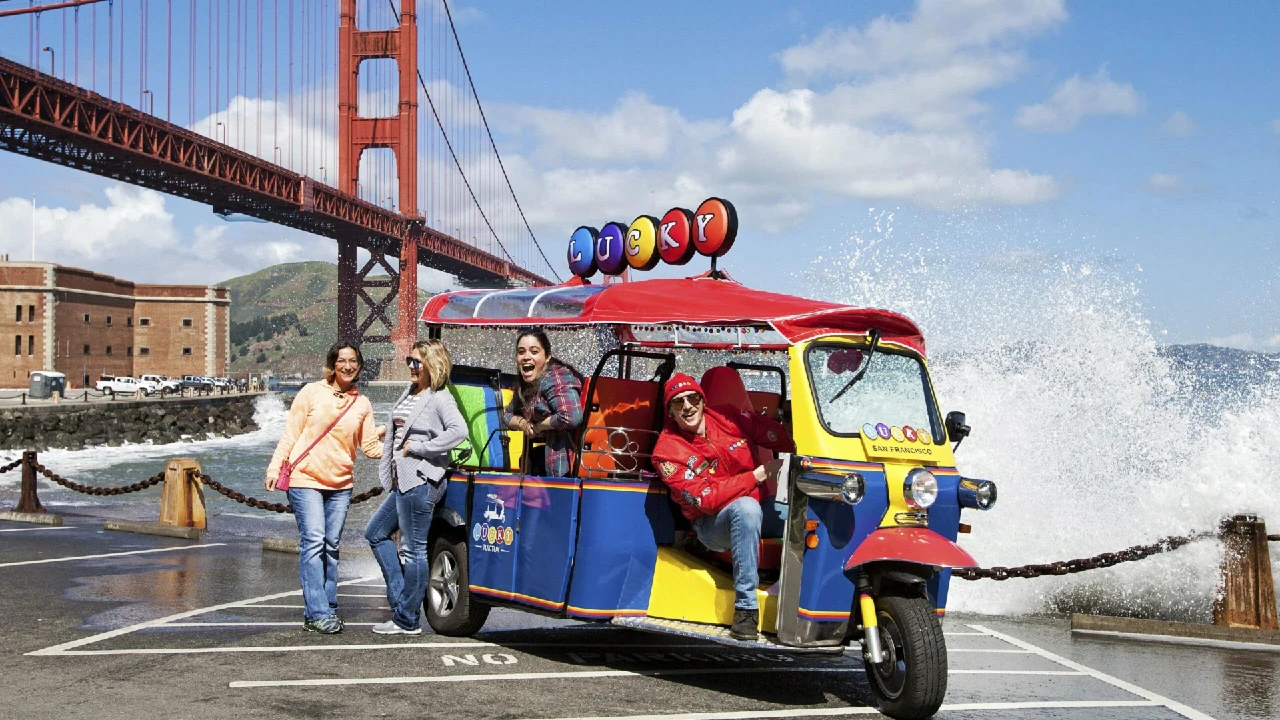
Those steep streets, sweeping views and landmark buildings are exactly the kind of discoveries a local guide can bring to life. A private Lucky Tuk Tuk city sightseeing tour lets your group enjoy a lively, electric open-air ride through San Francisco, with stories about the places you pass and an itinerary designed around the time booked.
Route note: Pacific Heights and Billionaires’ Row are possible sightseeing highlights, but not guaranteed on every tour length or every departure. Exact streets, customization and photo stops depend on the booked tour, traffic, access and guide routing. Check the current tour description and share your priorities before your visit.
Where
Pacific Heights, San Francisco; Billionaires’ Row is Broadway from Lyon to Divisadero.
When
Public streets and sidewalks can be visited daily. Daytime is best for architectural details.
Admission
Free to explore public streets and parks. Private homes are not open to the public.
Pacific Heights occupies the high ground north of central San Francisco, generally between neighboring areas such as Cow Hollow, Western Addition, the Marina and the Presidio. The exact boundaries differ depending on the map and local usage. Billionaires’ Row usually refers to Broadway between Lyon and Divisadero, at the neighborhood’s western end.
A quick scenic stop or short drive can give you a taste in 30–60 minutes. If you enjoy architecture, want to see the Lyon Street Steps or plan to visit a park, allow one to two hours or more. The steep streets mean walking times can be longer than they look on a map.
Clear daytime hours are ideal for appreciating the architecture. Late afternoon can make the Bay sparkle and bring out warm tones in building facades. Fog can arrive at any time, so a layer or light jacket is smart even in summer.
There are steep hills and stairways throughout the area, and on-street parking can be limited. Public transportation, rideshares or a sightseeing tour can reduce the logistics. For bus routes and live service information, check SFMTA. The Lyon Street Steps have significant stairs; visitors with mobility needs may prefer street-level viewpoints and park paths.
Most of the buildings that make Pacific Heights famous are private homes. The neighborhood experience is primarily an exterior architecture and sightseeing visit. For an actual interior historic-house experience, check the nearby Haas-Lilienthal House museum schedule.
It usually refers to a roughly three-block stretch of Broadway between Lyon and Divisadero streets in Pacific Heights. This is a residential area, not a formal attraction with a ticket booth or official entrance.
Absolutely. The architecture, mature trees, beautifully kept gardens, parks and Bay views are reason enough. The neighborhood’s history gives those sights even more personality.
Yes. Public sidewalks and streets are accessible, but hills can be steep. Be considerate around private homes, gates and driveways, and follow street-crossing signals.
Yes, especially for gardens, outdoor art, exercise and views toward the Bay and the Palace of Fine Arts. You can appreciate parts of the setting without climbing every stair.
Broadway offers beautiful mansion exteriors and streetscapes. The Lyon Street Steps are known for their hedges, stonework and layered views. Nearby parks offer attractive neighborhood scenery too.
No. Spreckels Mansion is a private residence, not a public house museum. Enjoy its architecture from a respectful distance on public sidewalks.
Much of the neighborhood escaped the destructive fire, and many older buildings survived, but it is too simplistic to say all homes were undamaged or that bedrock alone protected them. The fire’s path and post-quake development also shaped the district.
Yes. The exterior of fictional Grove High School was filmed at a private mansion on Lyon Street. The building is not a public school or an open movie-tour attraction.
The Haas-Lilienthal House, an 1886 Victorian home operated as a historic house museum, offers guided tours on selected dates. Check its official schedule and admission requirements first.
Pacific Heights may be included depending on the chosen duration, route, conditions and tour priorities. Specific Billionaires’ Row streets and photo stops are not guaranteed on every departure, so review the current tour details and ask about your preferences when booking.
A quick scenic look may take 30–60 minutes. Plan at least one to two hours if you want to walk among the homes, spend time at the Lyon Street Steps or explore the parks.
The Palace of Fine Arts, Presidio, Union Street and Cow Hollow, Golden Gate Bridge, and Fisherman’s Wharf are natural additions to a north-side San Francisco day.
The original page included Fort Mason, the Golden Gate Bridge, Union Street, Fisherman’s Wharf and the Presidio. All five are preserved below, with updated visitor context.
Also worth considering: Palace of Fine Arts, Marina Green and the waterfront around Crissy Field.
From beautiful Victorian streets and landmark mansions to waterfront views and unforgettable city stories, a private Lucky Tuk Tuk tour makes sightseeing a fun, personal experience.
Explore Private Lucky Tuk Tuk City Tours
Specific neighborhoods and stops depend on your selected tour and operating conditions.