CALL US! 1-415-851-9190
LetsGo@Lucky-Tuk-Tuk.com

Tuk tuks aren’t just a way to get from Point A to Point B—they’re a whole vibe. These three-wheeled little legends have been buzzing through busy streets, slipping through traffic like they own the place, and giving travelers stories they’ll tell for years. Depending on where you are in the world, you might hear them called tuk tuks, auto rickshaws, tricycles, or mototaxis… but the personality is always the same: loud (sometimes), charming (always), and weirdly unforgettable.
They’re also one of those “you have to do it at least once” travel experiences—like riding the San Francisco cable cars or eating street food in a night market. Some tuk tuks are simple and practical. Others are decked out like rolling pieces of art with neon lights, fringe, custom paint, and stickers that feel like they were chosen with absolute confidence.
Below are 16 fascinating facts about tuk tuks—plus a few bonus oddities—so you can appreciate what makes these quirky rides such a global icon.
Explore This Page: Intro | Quick Overview | Tuk Tuk History | 16 Fun Facts | What You’ll Learn | Key Takaways | Why a Private Tuk Tuk Tour Works Here in San Francisco | Plan Your Tuk Tuk Ride Worldwide | Related Tuk Tuk Facts and Info | Nearby Points of Interest here in San Francisco
A tuk tuk is typically a compact, three-wheeled vehicle that’s used as a taxi, shuttle, or everyday workhorse in cities around the world. They’re famous for being nimble, affordable, and perfectly sized for weaving through crowded streets where full-sized cars get stuck. Some run on petrol or diesel, and more and more are switching to electric power. And while they’re especially iconic in parts of Asia, you’ll also spot tuk tuk-style rides in Central America, South America, and even in parts of Europe.
Tuk tuks are closely tied to the older tradition of the rickshaw—human-powered rides that carried passengers through cities long before cars were common. Over time, people started experimenting with ways to make rickshaws faster and easier to operate, especially in dense urban areas where quick, compact transportation mattered. One popular origin story points to World War II-era Bangkok, when someone had the bright idea to strap a motor onto a rickshaw-style frame. Suddenly, it wasn’t just a ride—it was a zippy little transport machine that could haul passengers (and later, cargo) with way less effort.
From there, tuk tuks evolved into dozens of local variations across different countries: different names, different body styles, different engines, and different cultural “rules” about how you ride them and how you pay. That’s part of the fun: a tuk tuk in one place might be a simple commuter taxi, while in another place it’s a fully customized, neon-lit tourist magnet. Either way, the basic appeal hasn’t changed—small vehicle, big character.
Ever wondered where the name “tuk tuk” comes from? It’s all about that distinctive “tuk tuk tuk” noise that early models made when their tiny engines sputtered to life. Today’s engines can be quieter, but the catchy name stuck—literally.
![tuk-tuk-taxi-sri-lanka Tuk Tuk Taxi in Sri Lanka photo by: calflier001 [CC BY-SA 2.0 (https://creativecommons.org/licenses/by-sa/2.0)]](https://luckytuktuk.b-cdn.net/wp-content/uploads/tuk-tuk-taxi-sri-lanka.webp)
Tuk tuks have their roots in the humble rickshaw. Back in World War II-era Bangkok, someone had the genius idea of strapping a small motor onto a traditional rickshaw. The result? A zippy, fun, and slightly noisy ride that changed urban transport forever.
From the streets of Bangkok to the alleys of Mumbai, the beaches of Sri Lanka, and even parts of South America, tuk tuks have gone global. They’re a budget traveler’s dream—cheap, nimble, and perfect for weaving through packed city streets.
Tuk tuk owners love to customize their rides with funky stickers, bright canopies, and personal touches like tassels or flashing neon lights. Some even name their tuk tuks—because let’s be real, every great ride deserves a name.
If you’re in Bangkok, hopping on a tuk tuk is practically a rite of passage. But beware—some cheeky drivers might take you on a surprise detour to a souvenir shop instead of your actual destination. Haggle hard, and you’ll get a fair fare.
Tuk tuks might be famous in Thailand, but around the world, they have different names. In Jakarta, they’re called bajaj. In Bangladesh, they go by CNGs. In the Philippines, they’re often called tricycles. Same concept, different name.
In Sri Lanka, a man named Murjeeth Mohmeed is famous for giving tourists tuk tuk driving lessons. If you ever dreamed of driving one, he’s your guy—free of charge.

You’ll spot tuk tuks all over Central and South America too. In Guatemala, Honduras, and Nicaragua, they’re called mototaxis, and they’re just as zippy as their Asian cousins.
Believe it or not, the UK has a growing tuk tuk market. Some companies import and rent them out, and there’s even an online tool to design your own tuk tuk. Want one? It’ll cost you around £5,000 (shipping not included!).
Petrol and diesel tuk tuks are slowly being replaced by electric versions, especially in India, China, and Europe. These eco-friendly rides use 650–1400 watt motors and might just give taxis and rideshares a run for their money.
Portugal has embraced tuk tuk tourism in a big way. In Lisbon, you can take a 100% electric e-Tuk tour, giving visitors a more eco-friendly way to explore the city’s famous sights.
![Cambodia tuk tuk 4 wheels Cambodia tuk tuk with motorcycle Photo by: ajai [CC BY 2.0 (https://creativecommons.org/licenses/by/2.0)]](https://luckytuktuk.b-cdn.net/wp-content/uploads/Cambodia_tuk_tuk-4-wheels.webp)
In 2015, Miss Thailand won Best Costume at the Miss Universe pageant with an outfit inspired by—a tuk tuk. Complete with headlights, a windshield, and a front bumper-shaped skirt, she turned Thailand’s most iconic ride into high fashion.
Who really invented the tuk tuk? Some say it was the Piaggio Ape in Italy in 1947, but others argue that Japan had similar three-wheelers in 1934. Either way, we’re just glad they exist.
In the chaotic streets of Bangkok, tuk tuks aren’t just fun—they’re practical. Their small size lets them weave through traffic jams and slip into shortcuts that buses and taxis could never dream of fitting into.
Unlike taxis, most tuk tuks don’t have meters. That means prices are up for negotiation—and drivers will often start high. Rule of thumb: cut the price in half and negotiate from there.
Tuk tuks aren’t just for passengers—they’re also delivery vehicles. In Thailand, you’ll see them packed with fresh produce, weaving through markets to supply fruits and veggies to street vendors. Who needs a truck when you’ve got a tuk tuk?
In some parts of India and Thailand, tuk tuks aren’t just for zipping through traffic—they’re used as wedding vehicles. Couples deck them out in flowers, ribbons, and glitter to make a grand (and very budget-friendly) entrance. Talk about a ride to remember.
A group of adventurous travelers once took a tuk tuk on a road trip from Thailand to the UK—covering more than 12,000 miles across 37 countries. That’s one way to test the durability of these little three-wheelers.
While there aren’t any tuk tuks on the moon (yet), NASA engineers once studied the three-wheeled design as inspiration for potential Mars rovers. Turns out, tuk tuks’ ability to handle rough terrain might come in handy on another planet.
Reading fun facts is one thing—actually experiencing a tuk tuk ride is where the magic happens. If you’ve never ridden in one before, here’s what to expect: the ride feels closer to the street than a typical car, so the city (or neighborhood) feels more immediate. You hear the sounds, catch the food smells drifting out of restaurants, and notice little details you’d miss behind tinted windows. It’s part transportation, part sightseeing, and part “wait, I can’t believe this is a real thing” in the best way.
Depending on where you are in the world, a tuk tuk can be a quick hop between two blocks, a ride to a market, or a mini tour that turns into an adventure. In some places, you’ll negotiate the fare. In others, you’ll book a set route. Either way, tuk tuks are built for tight streets and quick turns—so you’re often able to cruise through areas where bigger vehicles feel clumsy or slow.
And if you want to take that experience to the next level, tuk tuks can be a surprisingly fun way to sightsee—especially when the goal isn’t just “get there,” but “enjoy getting there.”
If you’re skimming (no judgment), here are the tuk tuk moments that tend to stick with people—because they’re equal parts interesting, hilarious, and oddly practical:
Bottom line: tuk tuks are practical, but they’re also full of personality—and that’s why people remember them long after the trip ends.
A tuk tuk is kind of the perfect middle ground between “walking pace” and “stuck in traffic behind glass.” You’re close enough to the action to feel the city, but you’re still covering real ground—especially useful in a place with big hills, lots of neighborhoods, and a million photo-worthy corners. Tuk tuks are also naturally social: you’re not isolated in a big bus, and you’re not splitting up like you might with rideshares. It feels more like you’re out exploring with your group, just with an extra-fun set of wheels.
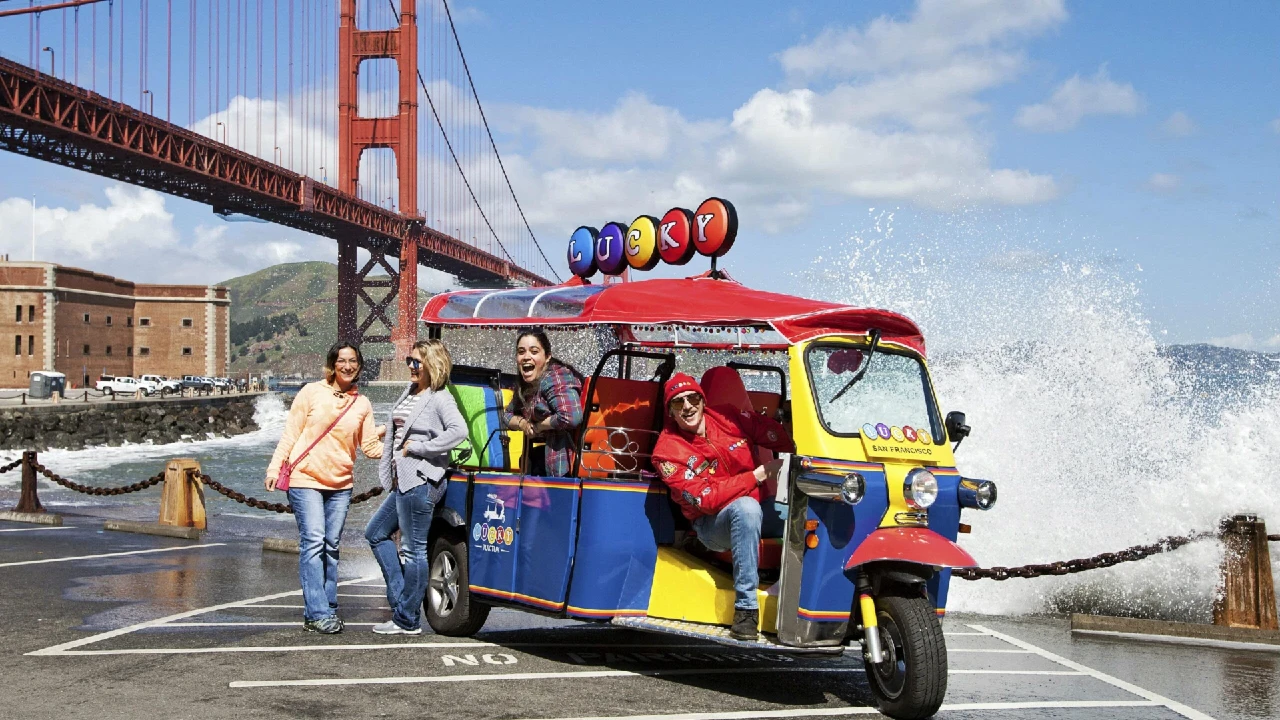
In San Francisco specifically, that mix matters. The city is packed with famous viewpoints, scenic drives, and neighborhoods where the “best part” is often the vibe—murals, architecture, street life, and those surprise views that pop up when you round a corner. A private ride format also makes it easier to keep the experience focused on what you actually care about: iconic highlights, local stories, and the kind of route that feels like a real day out—not a lecture.
If you want to experience a tuk tuk in San Francisco, this is the most direct way to do it: Lucky Tuk Tuk Private Small Group Tour.
If you’re traveling internationally, the easiest way to “find” a tuk tuk is usually simple: go where the crowds go. Major markets, tourist neighborhoods, beach areas, and dense city centers are often tuk tuk territory. In some destinations, you’ll flag one down like a taxi. In others, you’ll find them clustered at busy corners or transportation hubs. Because they vary so much by country and city, it helps to ask locally what the normal etiquette is—especially when it comes to fares, routes, and where tuk tuks are allowed to operate.
A few smart, traveler-friendly tips (without getting too in-the-weeds):
And if your tuk tuk plan includes San Francisco, you don’t have to “hunt” for one—there’s a dedicated option designed for sightseeing: Lucky Tuk Tuk Private Small Group Tour. It’s the easiest way to turn the tuk tuk experience into a memorable city day.
If you’re enjoying the global tuk tuk rabbit hole (same), here are a couple of perfectly on-theme reads to keep the momentum going—one focused on the wild variety of tuk tuk designs, and one that rounds up some of the best tuk tuk and auto rickshaw tours around the world.
Since this guide connects naturally to exploring San Francisco by tuk tuk, here are a few classic “nearby” ideas travelers often bundle together on a sightseeing day. Think of these as easy add-ons when you’re building an itinerary: iconic views, famous neighborhoods, and places where you’ll want your camera ready.
If you’re stitching together an itinerary, this is the sweet spot: combine a few iconic stops with a couple of “wander and vibe” neighborhoods so the day feels fun—not rushed.